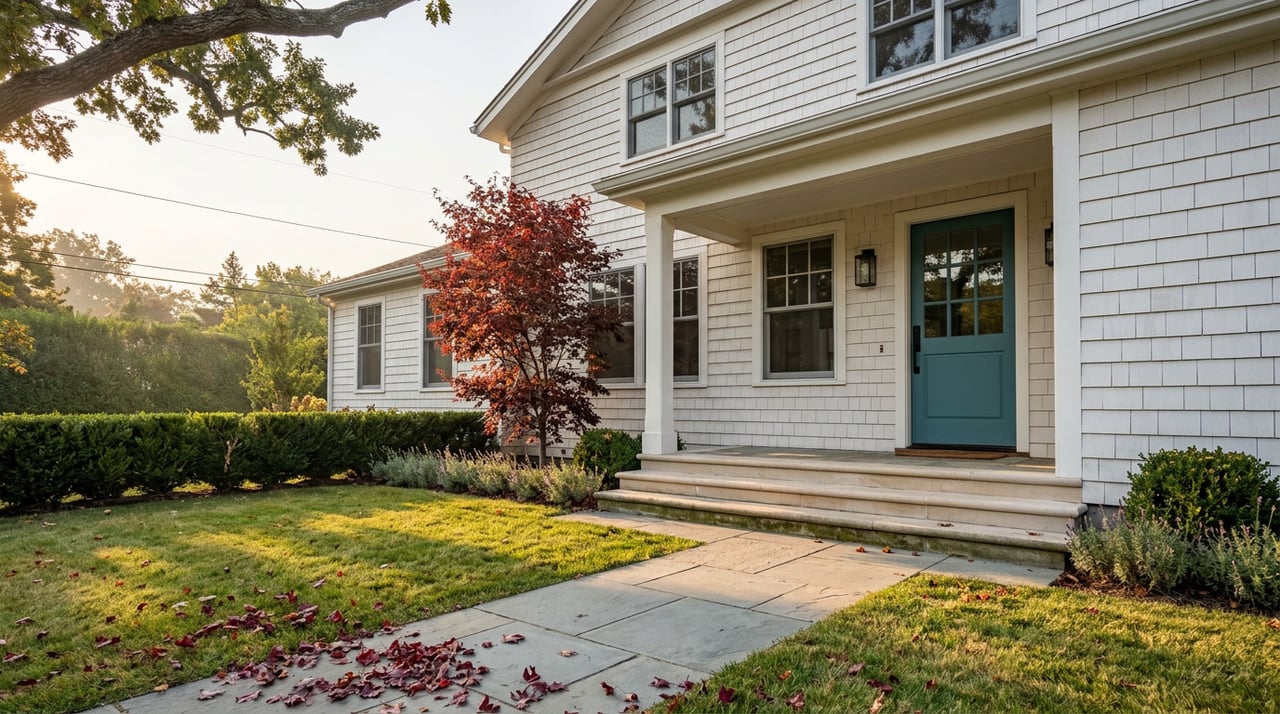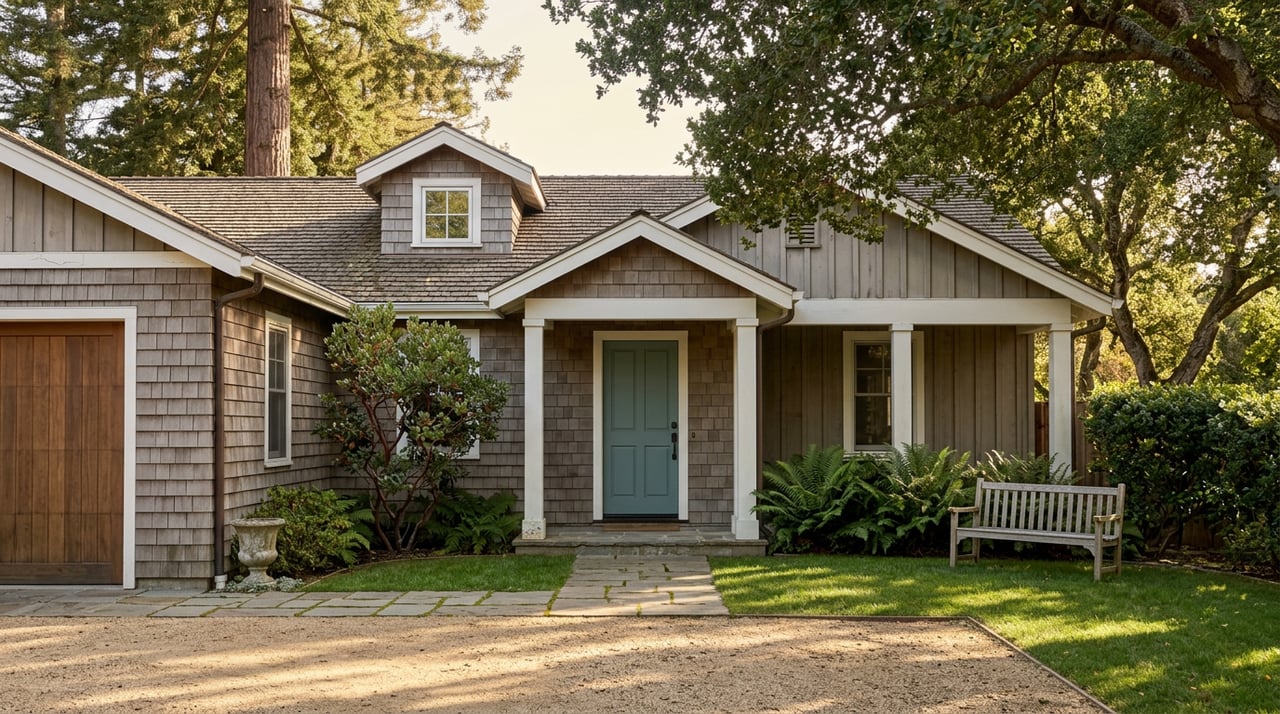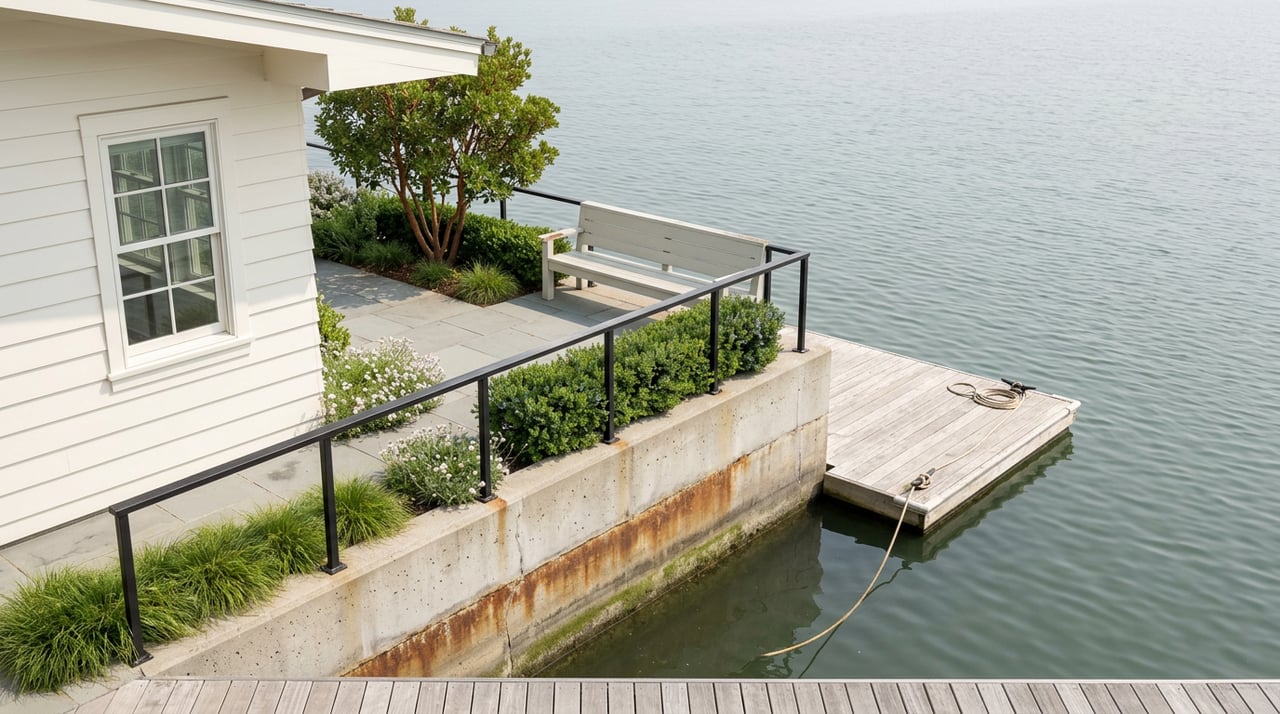
On the night of November 5, 2025, waves were breaking over the riprap at Tiburon's Shoreline Park, driven by king tides pushing past seven feet. Inside Town Hall, the Town Council was voting 3-0 to spend nearly $600,000 in state grant money hiring a coastal engineering firm, Moffatt & Nichol, to study exactly what those tides mean for the peninsula's future. The mayor stepped out of the room first, citing a business conflict, and the vote proceeded without him.
If you own waterfront property here, or you're weighing whether to list one, that meeting is worth understanding correctly, because most people will get the takeaway backward. The instinct is to treat a sea level rise study as bad news for value. It isn't, at least not yet, and treating it that way misses the friction that's actually going to show up in your escrow.
What the Study Actually Is
The contract funds a 24-month effort covering five tasks: project management, review of prior analyses, a vulnerability assessment, adaptation planning, and preliminary design of whatever strategies get chosen. Town staff have been explicit that this is a planning document, not a construction project. Nothing about the November vote changes what's buildable on your lot, what your flood zone designation is, or what you're required to disclose at closing. The $593,877 grant comes from the California Ocean Protection Council, and the whole exercise exists because Senate Bill 272 requires every Bay-fronting jurisdiction to have a state-approved shoreline adaptation plan in place by 2034. That's eight years out. The plan itself will set "triggers and thresholds" for future action rather than mandate anything today.
Town documents already name what's vulnerable in the long run: downtown Main Street, the Bay Trail, the ferry terminal, the Boardwalk shopping center, Greenwood Beach, and portions of Paradise Cay and Bel Aire. The county's working estimate, drawn from a 2017 Marin County Department of Public Works analysis and still cited in this year's planning materials, puts long-term exposure at over $400 million in assessed value and nearly $600 million in the single-family market, spread across roughly 135 acres and 450 properties. Those numbers describe a multi-decade horizon. They are not a signal that your appraisal is about to move.
The Friction That's Actually Near-Term
Here's the part that should change how you prepare a listing. A study like this doesn't just produce a report in two years. It produces attention now. Consultants are actively cataloging shoreline assets and vulnerabilities this year, the Town Council has already taken public comment on the project this summer, and that kind of scrutiny tends to travel. Appraisers, lenders, and insurers pay closer attention to shoreline structures when the town itself is visibly cataloging them, and buyers' agents on a waterfront deal are going to ask sharper questions than they did five years ago.
The problem for a lot of sellers is that Tiburon has, for years, required permits for shoreline work that most California municipalities never touch. The town's own permit guidance is direct about why: it points to the peninsula's geologic, topographic, and climate conditions, plus what it calls enhanced concerns about view protection, privacy, and aesthetics compared to neighboring communities. Guard railings at waterfront bulkheads, fixed piers, and fixed gangways require design review and a building permit here. So do water tanks and flagpoles, and satellite dishes larger than one meter across. If your dock or seawall was built or repaired decades ago, there's a real chance some portion of it predates the level of enforcement the town applies today, and that gap doesn't surface until a buyer's inspector or an appraiser goes looking for the paper trail.
That's the actual mechanism at work. It isn't the distant possibility of inundation. It's whether you can produce permit history and agency correspondence for work that's already sitting on your property.
Two Shoreline Cultures, One Peninsula
Not every waterfront owner in Tiburon faces this the same way, and the difference is worth understanding before you price a listing.
Paradise Cay, built on filled tidelands in the 1960s on the peninsula's east side, has something most of the rest of the shoreline doesn't: a shared paper trail. Marin County's CSA 29, a county service area, organizes and funds bay-related maintenance for the community, including periodic channel dredging. The county holds condition surveys, post-dredge reports, and meeting records, and CSA 29 held a public meeting at the Tiburon Yacht Club Clubhouse in August 2025 to review dredge plans and bid pricing for both the north and south sections of the cay. If you own in Paradise Cay, a chunk of your documentation already exists in a public file, whether or not you personally kept copies.
Elsewhere along the peninsula, on Paradise Drive, in Bel Aire, or around the Cove downtown, there's no equivalent collective recordkeeping. Each seawall, dock, and bulkhead is only as well documented as what the individual owner filed and kept. That's a meaningfully different starting position heading into a sale, and it's one that has nothing to do with sea level projections and everything to do with which shoreline you happen to sit on.
The Insurance Layer Is Different Too
Tiburon and Belvedere have fared better than Marin's hillside towns on the wildfire insurance front. Carriers have been pulling back across Mill Valley's upper elevations, Kentfield, Ross, and the San Anselmo hills over the past several years, and the peninsula's grassland-and-landscaping fuel profile, rather than redwood canyon, has kept it in a somewhat better position for standard-market coverage. That's genuinely good news if you're comparing Tiburon to inland hillside Marin.
It doesn't extend to the water's edge, though. Paradise Cay sits on filled tidelands, and homes there typically need flood insurance in a way most hill properties in Marin simply don't. That's a distinct policy, priced against FEMA flood zone status and elevation, and it's worth getting a current quote well before you're negotiating a purchase agreement rather than during a financing contingency.
What Actually Belongs in the File
If you're planning to list a shoreline property here in the next year or two, the practical response to all of this isn't to wait out the study. It's to assemble what a buyer's team will ask for regardless of when you sell:
- Permit history and any agency correspondence for prior seawall, bulkhead, dock, or gangway work
- For Paradise Cay, recent CSA 29 condition surveys, post-dredge reports, and meeting materials, available through Marin County's public works records
- A current FEMA flood zone determination and elevation certificate, along with an active flood insurance quote
- Documentation of design review approval for any waterfront railings, piers, or similar structures added or repaired since the town tightened its permit code
Major shoreline repairs routinely require sign-off from more than one agency, since the Bay Conservation and Development Commission has its own jurisdiction over dock and seawall work layered on top of the town's local permit requirements. That stacking is exactly why it pays to check records before you list rather than after an inspector flags something.
The Study Isn't the Risk
The honest read on Tiburon's shoreline adaptation plan is that it will matter enormously to how this peninsula looks by the time the plan is due to state regulators in 2034, and it will matter very little to your listing this year, provided your paperwork is in order. The town is going to keep looking closely at its shoreline assets for the next two years no matter what any individual homeowner does. Sellers who treat that as a prompt to organize their own file, rather than a reason to worry about the tide charts, are the ones who avoid a repricing conversation in week three of escrow.
If you're weighing a sale on the Tiburon waterfront, or in Paradise Cay specifically, it's worth walking through what's actually documented on your property before a buyer's team does it for you. Suzanne Hughes Homes works this peninsula regularly and can help you sort out what belongs in that file well before you go live. Elevate your next move, contact Suzanne today.